 Lillory
Sign in
Lillory
Sign in
Reading practice log.
The tutoring hour is one hour. The days in between decide most of the progress, and they usually vanish without a trace. This free weekly log gives those days a record: what a reader practiced, for how long, and how it went. Fill it in by hand at the table, then hand it back so the next session starts from what actually happened. Print the blank sheet below, or read on for how to use it without turning practice into a chore.
Or skip the paper entirely. If your reader uses Lillory, the platform keeps this exact record for you. Every session is logged on its own, so there is nothing to fill in, remember, or carry to the next appointment. See how that works below.
Print the blank log
One week per sheet. Free, and no sign-up.
| Day | What we practiced (skill or list) | Minutes | How it went |
|---|---|---|---|
| Monday | |||
| Tuesday | |||
| Wednesday | |||
| Thursday | |||
| Friday | |||
| Saturday | |||
| Sunday |
Note for the week (a win, a snag, a question for the tutor): ______________________________________________________________________
How to use the log without it becoming a battle.
Keep the entry shorter than the practice.
A log that takes longer to fill in than the practice took will be abandoned by Wednesday. A skill, a number, and three words for how it went is enough. "silent-e words, 8 min, tired but got them" tells a tutor everything the next session needs.
Log one skill, not everything.
The point of the days between sessions is to hold one skill, not to teach new ones. Write the single thing the tutor asked for. If a reader practiced their decodable word list for the current pattern, that is the whole entry.
Let "how it went" be honest.
The column that helps a tutor most is the one parents are tempted to soften. A row that says "melted down, stopped early" is more useful than a week of cheerful checkmarks, because it tells the tutor to change the level or the time of day. Nobody is graded here. For what to write in the skill column at each stage, see what to practice between sessions.
Bring it to the session.
A log only pays off if the tutor reads it. Handed over at the start of a session, one week of rows answers the questions a tutor would otherwise spend ten minutes asking, and it turns a vague "it went fine" into something you can both act on.
See it in the app
No paper needed: Lillory keeps the log for you.
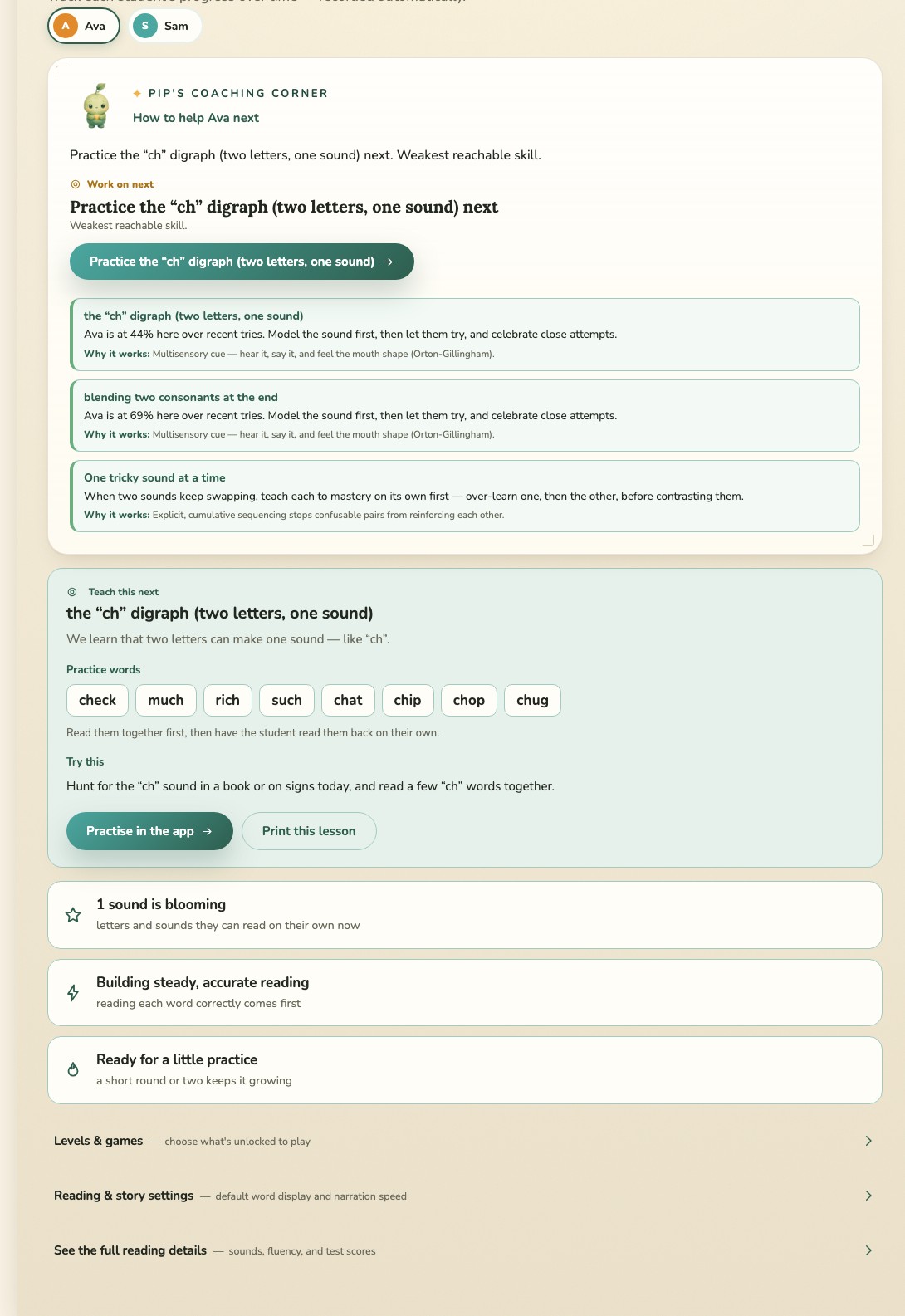
Everything this sheet asks you to write down, Lillory records on its own. Every session a child plays is logged automatically, so there is nothing to remember and nothing to carry to the next appointment. The days between tutoring stop being a blank, without a pen.
Each column of the paper log fills itself in: the skill practiced, the time spent, and how it went, session by session. A tutor opens the reader's record and sees the week at a glance.
Shown: a reader's practice and accuracy over time, kept automatically.
Open LilloryQuestions people ask.
How often should a child practice reading at home?
A short session most days beats one long session a week. Ten focused minutes that a reader will actually do is worth more than thirty that end in tears. The log is there to show the pattern over a week, not to hit a number.
What should go in the "what we practiced" column?
The single skill the tutor is working on right now: a sound, a spelling pattern, or a word list. If you are unsure, ask the tutor to name it, and write that same phrase each day until it changes.
Do I need to log if my child uses an app?
If the app keeps its own record of what was practiced and how it went, that record replaces the paper log. This sheet is for practice that would otherwise leave no trace.
Get new tools as we publish them
Word lists, charts and templates for practitioners. Free.
The Lillory Community