 Lillory
Sign in
Lillory
Sign in
How a reading evaluation works.
If a child is struggling to read, an evaluation is how you move from worry to a clear picture and a plan. This is a plain guide to what an evaluation involves, who does it, what it tests, and when and how to ask for one. Lillory does not evaluate or diagnose; a qualified professional does that. What we can do is help you arrive with a record instead of a memory.
Who does an evaluation.
A formal evaluation is carried out by a qualified professional: a school psychologist, a licensed psychologist, a neuropsychologist, or a speech-language pathologist, sometimes as a team. A tutor, a teacher or an app can gather useful information and raise a concern, but the evaluation itself, and any diagnosis, belongs to a trained professional.
What it usually tests.
A reading evaluation looks at the pieces that reading is built from, using standardized tests alongside observation and history. It typically checks how well a child hears and works with the sounds in words, how accurately and quickly they read single words and passages, how they spell, and how their reading compares with their overall ability. The point is not one number but a profile: where the strengths and the gaps are, and what they add up to.
School evaluation or private: two routes.
You can request an evaluation through your child's school, usually in writing, which starts a process with timelines set by law where you live. Or you can seek a private evaluation, which is often faster and more detailed but comes at a cost. Many families do one, then the other. Either way, a written request dated and kept is the thing that starts the clock, so put it in writing.
When to ask for one.
Ask when the signs of reading difficulty persist despite good teaching, when a child is falling further behind rather than catching up, or when the effort reading costs is affecting how a child feels about school. You do not need a diagnosis before you start good practice at home, and you do not need to wait for a crisis to ask for an evaluation.
How to prepare so the picture is complete.
An evaluation is a snapshot of a few hours. It gets sharper when you bring the history around it: how long reading has been hard, what has been tried, and what practice has actually looked like week to week. A record of what a child practiced, how often, and where they got stuck turns "we have been working on it" into evidence. Our free reading practice log is one way to keep that by hand; an app that logs practice keeps it for you.
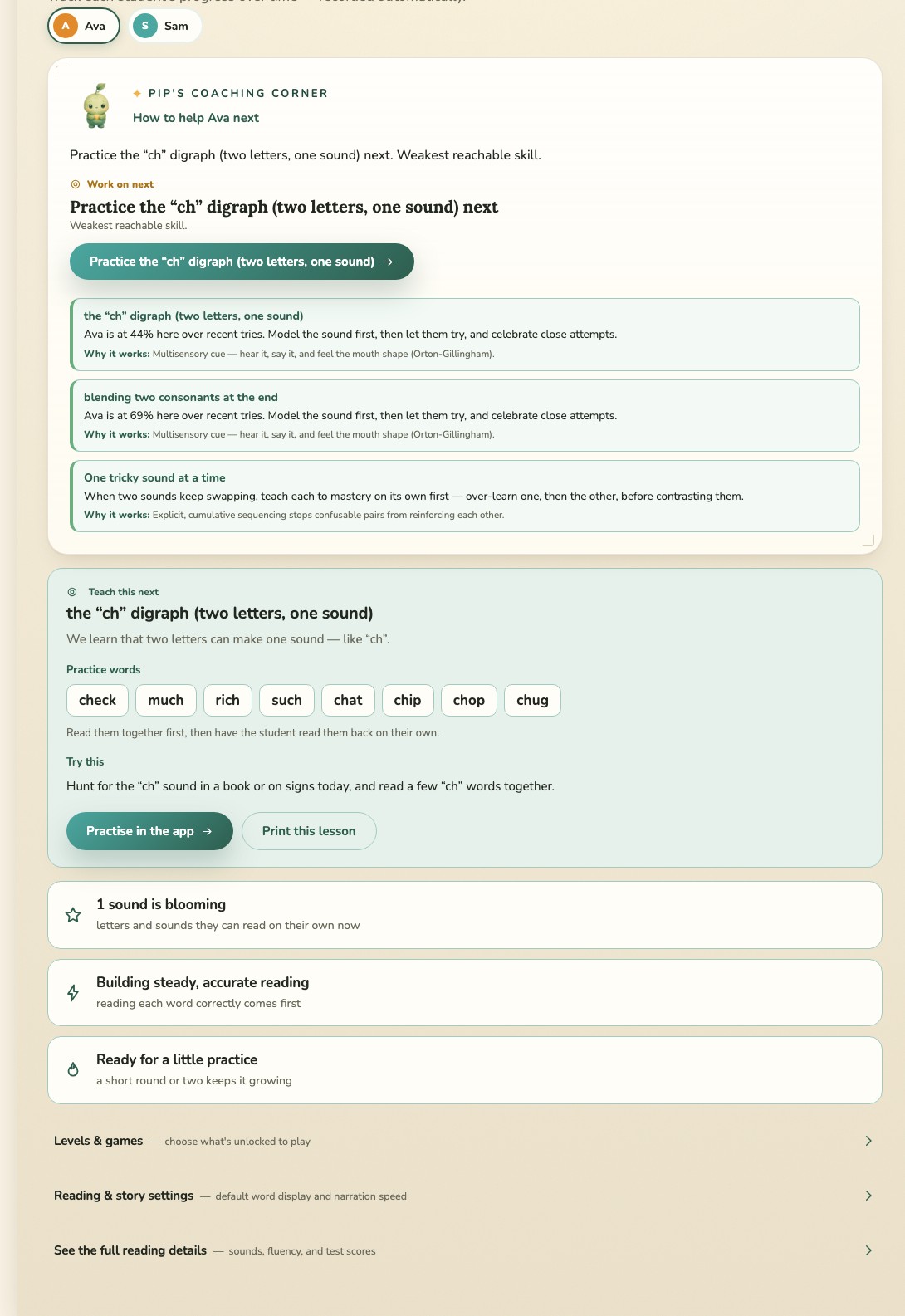
See it in the app
Arrive with a record, not a memory.
Lillory keeps an automatic record of what a reader practiced and how they did, session by session. It is not an evaluation and it does not diagnose, but it is exactly the practice history an evaluator is glad to see: real, dated, and specific to your child.
Shown: a reader's practice and accuracy over time.
Open LilloryQuestions parents ask.
Who can diagnose dyslexia?
A diagnosis is made by a qualified professional such as a licensed or school psychologist, a neuropsychologist, or in some settings a speech-language pathologist. A tutor, teacher or app can raise a concern and gather information, but cannot diagnose.
How do I ask my child's school for a reading evaluation?
Put the request in writing to the school, dated, stating your concern about reading. A written request typically starts a process with timelines set by law where you live. Keep a copy.
What should I bring to a reading evaluation?
Bring the history: how long reading has been hard, what has been tried, report cards or teacher notes, and any record of practice showing what your child worked on and where they got stuck. A dated practice log makes the picture more complete.
Read next: How Lillory measures a reader's practice