 Lillory
Sign in
Lillory
Sign in
Signs a child is struggling with reading.
Reading trouble rarely announces itself. It shows up as a child who suddenly hates book time, or who reads a word on one page and misses it on the next. Below are the signs parents notice most, what each one usually means, and what helps. None of this is a diagnosis; it is a guide to what you are seeing and what to do next, including when to ask a professional.
Signs you might see at home.
Guessing at words from the first letter or the picture. A child says "pony" for puppy because both start with p. Guessing is a workaround for decoding that is still too hard, and it hides the problem because it works just often enough.
Reading is slow and takes real effort. Sounding out every word, losing the sentence by the time they reach its end, or reading in a flat, word-by-word way well after classmates have smoothed out.
Knowing a word one day and losing it the next. New words fade before they stick, so progress feels like going backward. This is common and normal early on, and it is also a sign a reader needs more, shorter practice.
Avoiding reading, or big feelings around it. The book slams shut, twenty minutes of reading takes an hour, or practice ends in tears. A child who refuses to read out loud is often protecting themselves from feeling exposed.
Trouble hearing the sounds in words. Difficulty rhyming, clapping syllables, or telling you the first or last sound in a spoken word. The ear for sounds is the ground reading is built on, so trouble here shows up early.
Signs a teacher may mention.
Reading below grade level, trouble with spelling and writing as well as reading, mixing up similar letters or small words past the age most children have sorted them out, or reading that costs so much effort there is nothing left for understanding the story. One sign on its own may mean little. Several together, especially if they persist, are worth taking seriously rather than waiting out.
What helps, starting now.
The thing that helps most is explicit, structured practice in decoding: teaching the code directly and in order, rather than hoping a child infers it. Keep practice short and frequent, cover the pictures so a reader has to look at the letters, and use books at the right level even when they feel easy. Our free decodable word lists and plain guide to structured literacy are a place to start at home tonight.
When to ask for an evaluation.
If the signs persist despite good teaching, or a child is falling further behind, ask about an evaluation rather than waiting to see if they catch up. Waiting is the advice parents most often regret. An evaluation is done by a qualified professional, and it is how you learn what is going on and what a child is entitled to. We wrote a plain guide to how a reading evaluation works and how to prepare for one.
See it in the app
Practice a struggling reader will actually do.
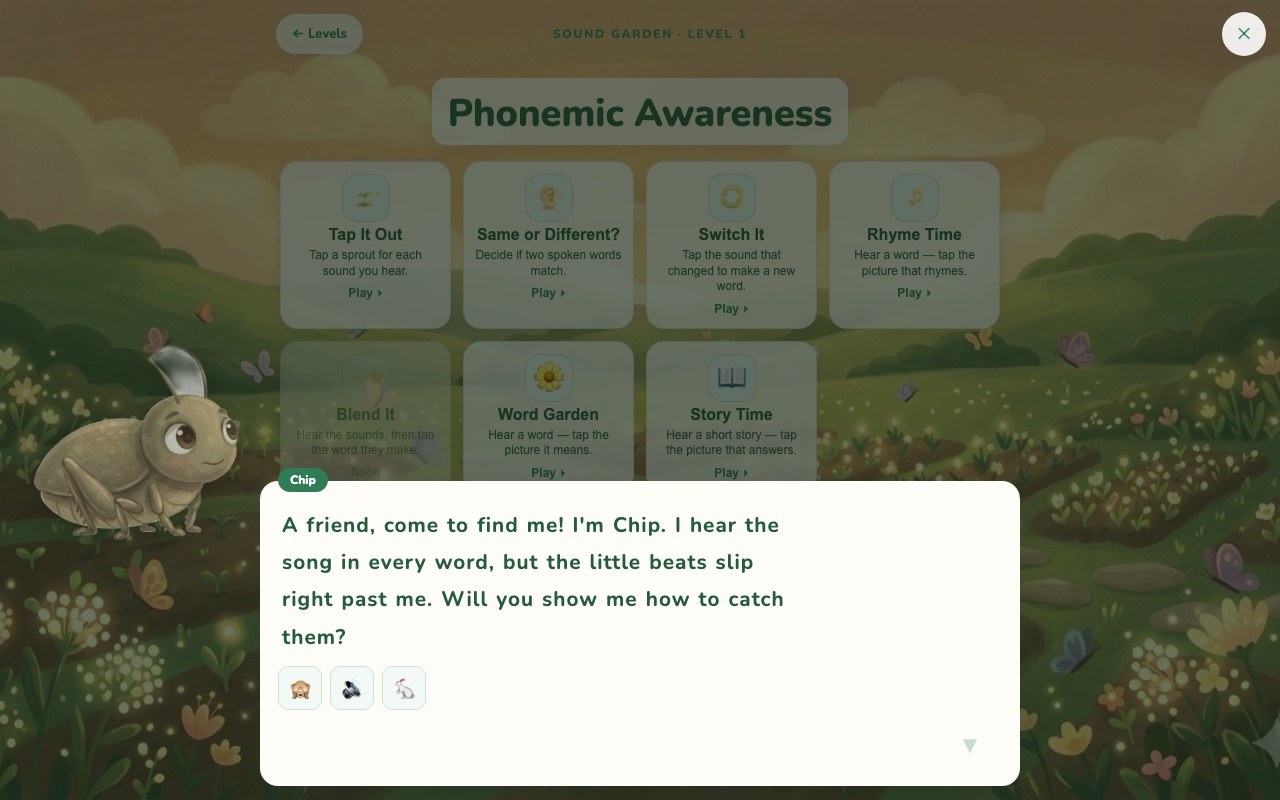
Lillory teaches decoding in order, as a calm garden of games with no timers or scores on a child's screen, so the practice a struggling reader needs most feels like play rather than the thing they dread. Families can use it at home, with or without a tutor.
Shown: reading practice as a game, not a test.
Open LilloryQuestions parents ask.
What are the early signs of a reading difficulty?
Common early signs are guessing at words, slow effortful reading, avoiding reading or big feelings around it, knowing a word one day and losing it the next, and trouble hearing sounds in words such as rhyming or counting syllables.
Is it normal for my child to reverse letters?
Reversing letters like b and d is common in early readers and often sorts itself out. It is worth attention when it continues past the age most children have outgrown it, especially alongside other signs of reading difficulty.
Should I wait to see if my child catches up?
If the signs persist despite good teaching, waiting is the step parents most often regret. Structured practice can begin at home now, and a professional evaluation tells you what is going on rather than leaving you to guess.
Read next: How a reading evaluation works