 Lillory
Sign in
Lillory
Sign in
Word mapping: connecting sounds to spellings.
Word mapping is the small routine that turns a word from something a reader guesses into something a reader stores. You say the word, break it into its sounds, and match each sound to the letters that spell it. It answers the question a struggling reader keeps hitting: not what does this say, but why is it spelled that way. Here is how to map a word with a child.
Start with the word said aloud, not the letters.
Mapping runs from sound to print, so it begins with the ear. Say the word, have the child say it back, and only then look at how it is written. A reader who starts from the letters will read left to right and guess; a reader who starts from the sounds knows how many pieces the word should have before they see it.
Break the word into its sounds, one tap at a time.
Have the child say the word slowly and count the sounds, one tap or one finger per sound. The word ship has three sounds: /sh/ /i/ /p/. This is the step that catches the digraph, because the child says one sound for sh, not two. Counting sounds before spelling is what keeps a reader from writing a letter for a sound that is not there, or missing one that is.
Match each sound to the letters that spell it.
Now line the sounds up with the spelling. Draw a box or a line for each sound, and write the letters that spell that sound in each one: sh in the first, i in the second, p in the third. The child sees that one box can hold two letters, which is the whole idea of a digraph or a vowel team made visible. When a sound has more than one possible spelling, our free sound-spelling chart lists the choices, and mapping is where a reader learns which one this word took.
Say it, spell it, and check the boxes match the sounds.
Finish by reading the mapped word back and counting: does the number of boxes match the number of sounds you tapped at the start. If a reader mapped rain into four boxes instead of three, the check catches it, and the fix teaches the vowel team: ai is two letters, one sound, one box. The check is the part that turns the exercise into learning.
Map the words a reader is already practicing.
Word mapping is not a separate curriculum; it is a way to work the words a reader is on. Pull them from the pattern you are teaching, using our decodable word lists, so every mapped word uses only spellings the reader has met. A few mapped words a day does more than a page of copying, because each one is stored by its sounds rather than its shape.
See it in the app
Mapping, built into the play.
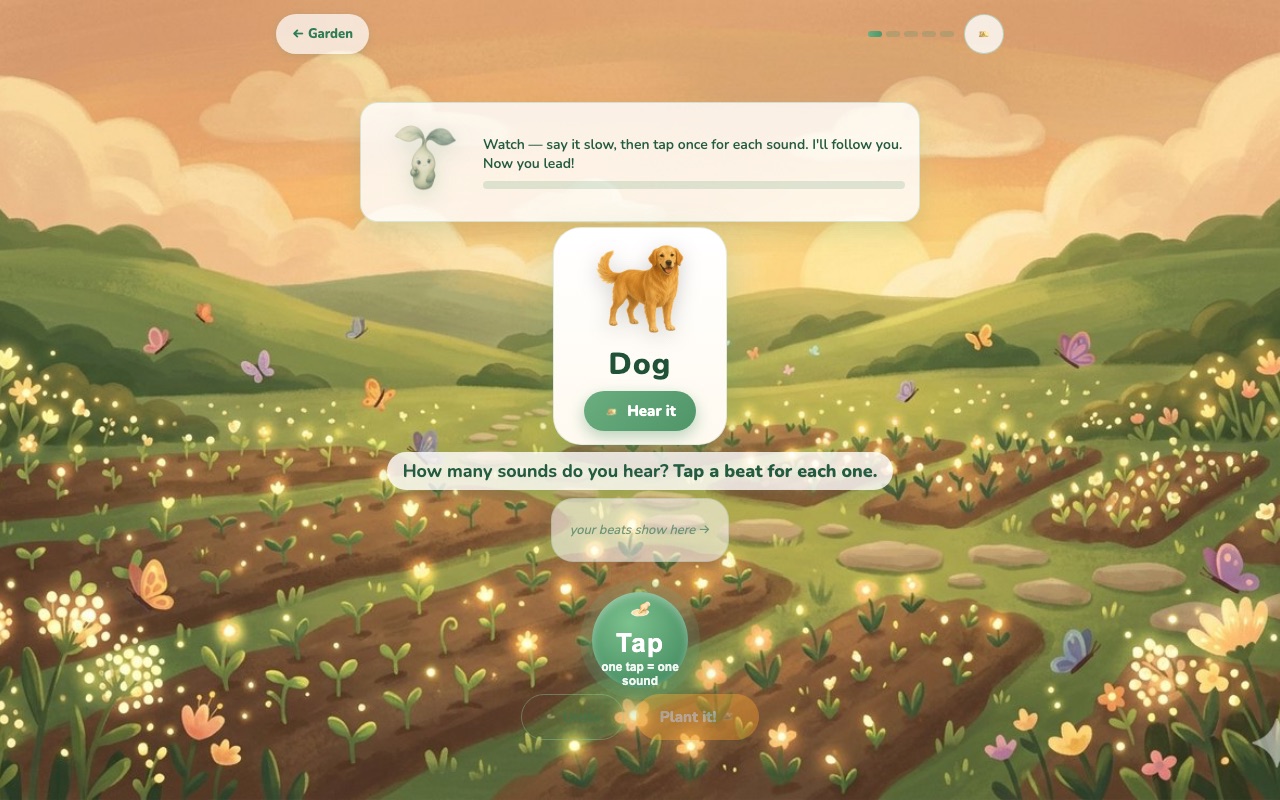
The same routine runs through Lillory: a child taps once for each sound they hear, then builds the word from its letters, so the link from sound to spelling is the game rather than a worksheet. The dashboard picks which words a reader maps next.
Shown: tapping a word into its sounds before building it.
Open LilloryRead next: How to teach consonant digraphs