 Lillory
Sign in
Lillory
Sign in
Turning a paper Orton-Gillingham lesson into daily practice.
An Orton-Gillingham aligned lesson is careful, multisensory, and usually about an hour. The days between are where that hour is kept or lost. Here is how to carry the exact skill of a lesson into the week, in a form a child will actually do and a tutor can see.
Carry one skill, not the whole lesson.
Between sessions, less is more. Pick the single pattern the lesson introduced or reviewed, and practice only that. A short set of decodable words in that pattern, read aloud for two minutes a day, keeps the skill warm without asking a family to run a lesson. Our free decodable word lists give you a ready set for each pattern.
Make it something a child will choose.
A worksheet asks a tired child to do the hardest thing in their day, alone, with nobody watching. It usually loses. Practice that a child will start on a Tuesday without a fight is a design question, not a discipline one: short, a little playful, and the same pattern every time so the child feels themselves getting faster.
Close the loop so nothing is invisible.
The problem with paper is that the tutor cannot see what happened. Did it get done? What was still hard? Whatever you send, build in a way to know, even if it is just the family reporting which words were tricky. When the between-session work is visible in both directions, the next lesson starts in the right place instead of guessing.
Where a tool helps.
This is the gap Lillory is built for: practice a child asks for, tied to the pattern the tutor assigned, with the results visible when they sit back down. It does not replace the lesson; it holds the days between together. See how it works for tutors.
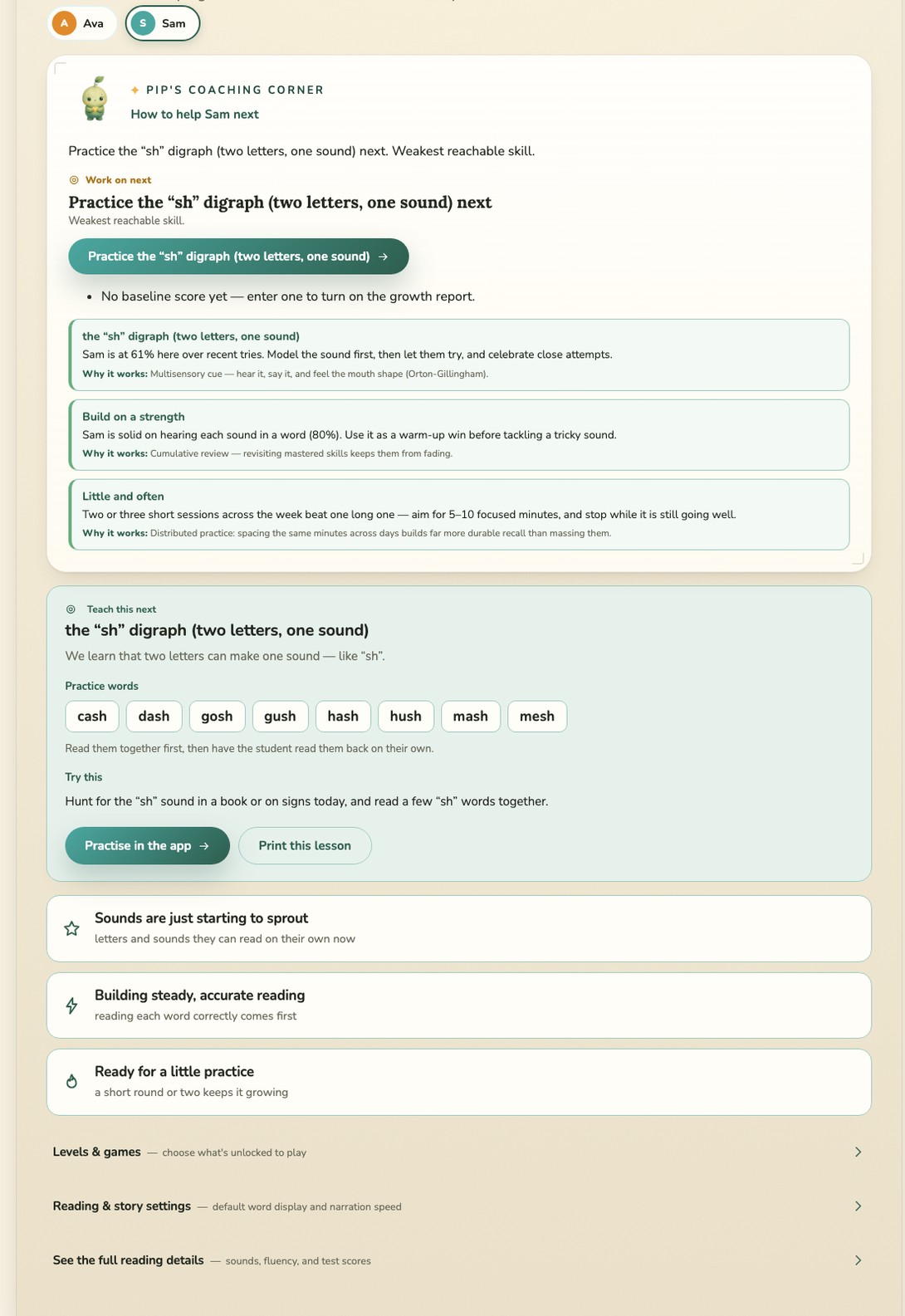
See it in the app
The days between, made visible.
This is the tutor's view in Lillory: the next skill worth teaching, decodable words for it, and a child's practice waiting when they sit back down. The lesson can stay on paper; the week between does not go dark.
Shown: the next skill, its practice words, and practice in the app.
Open LilloryRead next: What to practice between sessions, by stage