 Lillory
Sign in
Lillory
Sign in
How to teach sight words that stick.
Sight words are the common words a child meets constantly, and some of them, like said, was and of, do not follow the usual patterns. The old advice was to memorize them whole, by flashcard drilling. That is exactly what tends not to stick for a struggling reader. A better way, often called the heart-word method, teaches the parts that do follow the rules and marks only the tricky part to learn by heart.
Map the sounds you can
Take a word like said. Most of it is regular: the s and the d say exactly what you expect. Only the middle, ai saying a short e, is the surprise. Showing the child that most of the word behaves means there is far less to memorize.
Put a heart over the tricky part
Mark the one part that has to be learned by heart, a small heart drawn over the ai in said. The child learns the regular letters by sounding them, and remembers only the marked part. That is why these are called heart words: only the heart part is memorized.
Teach by reading and spelling, not drilling
Have the child read the word, then spell it out loud while naming the tricky part: s, then the heart part, then d. Reading and spelling the same word, and saying why the hard part is hard, sticks far better than looking at a flashcard again and again. Practice a few words at a time, and revisit them.
A short list to start with
These are among the most common words a beginner meets that are worth teaching as heart words. Print the list, teach a few at a time, and mark the tricky part of each together.
For the patterns behind the regular parts of these words, see the free decodable word lists and the sound-spelling chart.
See it in the app
Tricky words, learned by heart.
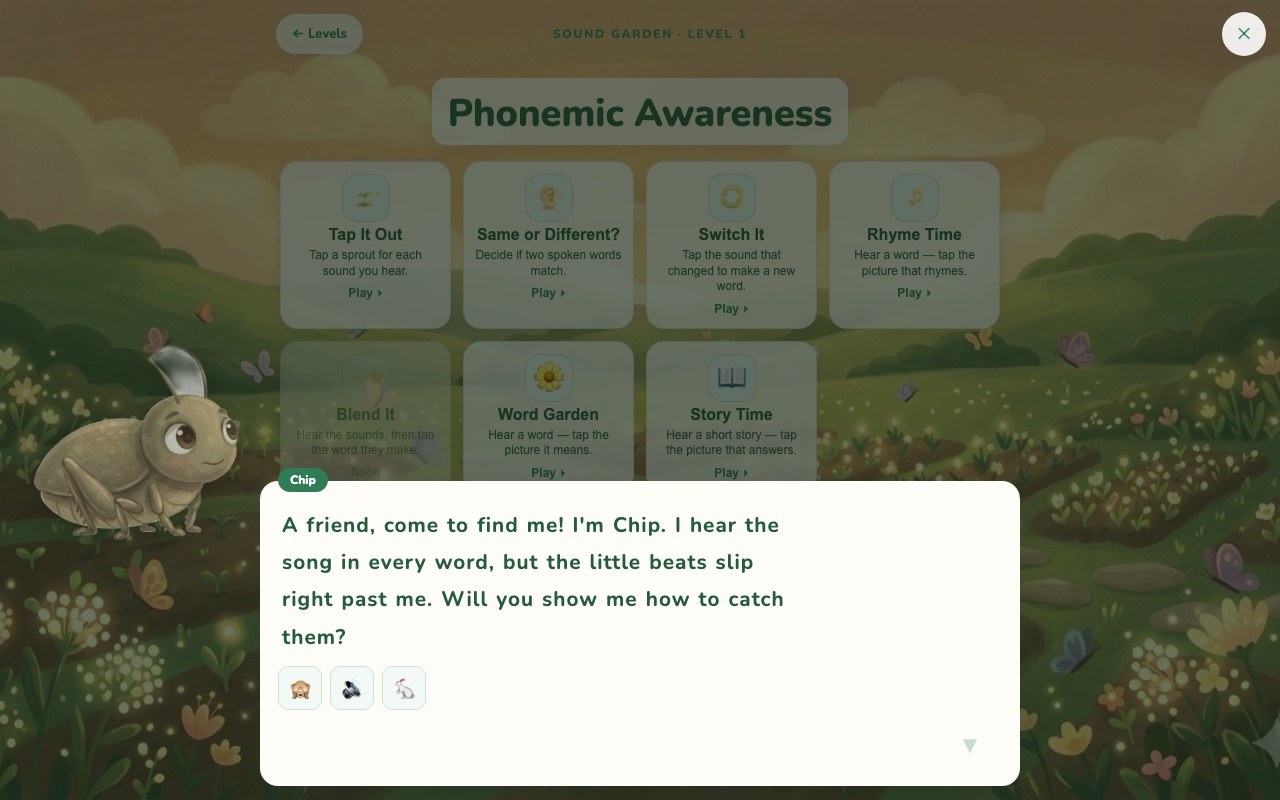
In Lillory, children learn high-frequency heart words in Plant the Word: they learn the one tricky part by heart, then spell it back, the same heart-word method as this guide.
Level 2: Plant the Word.
Open Lillory